
The Fundraising Partnership is proud to support efforts to prevent strokes and help people survive and recover after experiencing one. We are honoured to work alongside Stroke Association, a vital charity making a significant difference to an issue that impacts so many people across Britain.
That is why we are committed not only to raising funds for the Stroke Association, but also to engage with the public and raise public awareness of strokes.

What is a stroke?
Different types of stroke
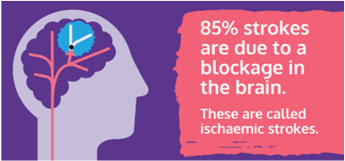
An ischaemic stroke is caused by a blockage cutting off the blood supply to the brain. This is the most common type of stroke.
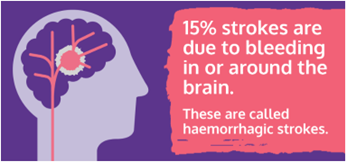
A haemorrhagic stroke is caused by bleeding in or around the brain.
Atransient ischaemic attack or TIA is also known as a mini-stroke. It is the same as a stroke, except that the symptoms only last for a short amount of time. This is because the blockage that stops the blood getting to your brain is temporary.

Effects of stroke
Communication problems are very common after a stroke. Around one-third of stroke survivors have problems with speaking, reading, writing and understanding what other people say to them.
Why do they happen?
When we communicate, our brain has to complete a series of tasks. Different parts of our brains are responsible for each of these tasks. If one of these parts is damaged by a stroke, it can cause problems with communication.
Communication problems
What kind of communication problems do people have?
Aphasia affects your ability to speak and understand what
others say. It can also affect your ability to read and write. It happens when you’re no longer able to understand or use language. Aphasia is a common problem after stroke and around a third of stroke survivors have it.Dysarthria happens when you’re not able to control the muscles in your face, mouth and throat very well, so it's difficult to speak clearly. This can mean that your speech becomes slurred or slow or that your voice sounds quiet.
Apraxia of speech is when you can’t move the muscles in your
face, mouth or throat in the order you need to when you’re speaking. This can make it difficult for other people to understand you.
Physical effects of stroke
Headaches after stroke
Changes to taste and smell
Swallowing problems
Vision problems after stroke
Bladder and bowel problems
Balance problems after stroke
Seizures and epilepsy after stroke
Pain after stroke

The role of the Stroke Association
We provide specialist support, fund critical research and campaign to make sure people affected by stroke get the very best care and support to rebuild their lives.
Rebuilding lives after a stroke is a team effort. It takes the determination of stroke survivors and carers, the generosity of supporters and the dedication of the healthcare and research communities to get there.
To help the recovery of stroke survivors we provide information, support and advice. Our key areas of work include:
Support services
Our support services help hundreds of thousands of people through one of the most frightening experiences of their lives and build a life after a stroke. Our support services include but are not limited to emotional support and communication support.
Information
Our information is based on accurate and up-to-date evidence. We ask stroke survivors and their families, as well as medical experts, to help us when putting our information together.
Research
Our research helps improve treatments, care and rehabilitation - saving thousands of lives and helping stroke survivors make the best recovery possible.
Fundraising
Through our busy events schedule, our fundraisers work nationally and with local communities to raise much-needed funds to support stroke survivors.
Campaigning
We are the force for change. By working with people affected by stroke, we drive improvements in stroke care by creating campaigns like our A New Era for Stroke campaign, which led to the National Stroke Programme in England.
Volunteering
Our fantastic volunteers play a vital role in the recovery of stroke survivors across the UK. We provide training and resources so that our volunteers are well-equipped to help stroke survivors with their recovery and rehabilitation.
Why research matters
Our research has improved how we spot the symptoms of stroke and the people most at risk, so we can get them the best treatment in the critical minutes and hours that follow.
Stroke remains the fourth biggest killer in the UK and is a leading cause of adult disability. The number of people that will have a stroke is expected to rise. However, thanks to research, there are fewer people dying from a stroke than ever before.